
Table of Contents
TL;DR
- Floss before brushing, as this helps remove plaque and food particles from between teeth, allowing brushing to clean more effectively.
- Flossing first clears tight spaces, allowing fluoride toothpaste to reach areas your toothbrush cannot.
- Floss once a day, ideally at night, but the best time is the one you can follow consistently.
- Use gentle movements and proper technique, and switch to a clean section of floss as you move between teeth.
- Choose a type of floss that feels comfortable to use daily, whether it is waxed, unwaxed, tape, a pick, or a water flosser.
- Avoid rushing, skipping back teeth, or snapping floss into your gums, as these habits reduce its effectiveness.
What Is The Right Order for Flossing and Brushing?
Many people follow a daily brushing routine without considering the order of steps. Therefore, a frequent topic of discussion during dental cleanings is whether to floss before or after brushing. As dentists, we generally recommend flossing first, as it removes plaque and debris from between teeth and allows the toothbrush to clean those areas more effectively.
If you have been brushing first and flossing later, it is not harmful. But changing the order can make your routine more thorough. Over time, this small adjustment can support healthier gums and cleaner teeth.
In this guide, we will explain why you should floss first and how to get the most out of your daily routine.
Why Is It Better to Floss Before Brushing?
Over the past 35 years at Anoka Dental, we’ve seen that small changes in daily habits can make a noticeable difference in oral health. One of those is deciding whether to floss or brush first. Flossing before brushing tends to work better for most patients. Here’s why:
- It removes food particles and plaque from between your teeth before you start brushing.
- It clears tight spaces that your toothbrush cannot easily reach.
- It allows your toothpaste to spread more evenly across all tooth surfaces.
- It helps brushing feel more effective, rather than moving debris around.
- It improves cleaning along the gumline where plaque often builds up.
- It helps reduce the chances of plaque hardening into tartar over time.
- It supports healthier gums by removing buildup that can lead to irritation.
- It may help with fresher breath by clearing trapped food early in the routine.
Looking at your teeth before and after flossing makes this easier to understand. Before flossing, buildup sits between teeth. After flossing, those spaces are cleared, so brushing can do its job properly. This approach doesn’t change your routine; it just makes each step work better.
Simple Routine for Flossing and Brushing
To make things simpler, here is a routine we often recommend to our patients:
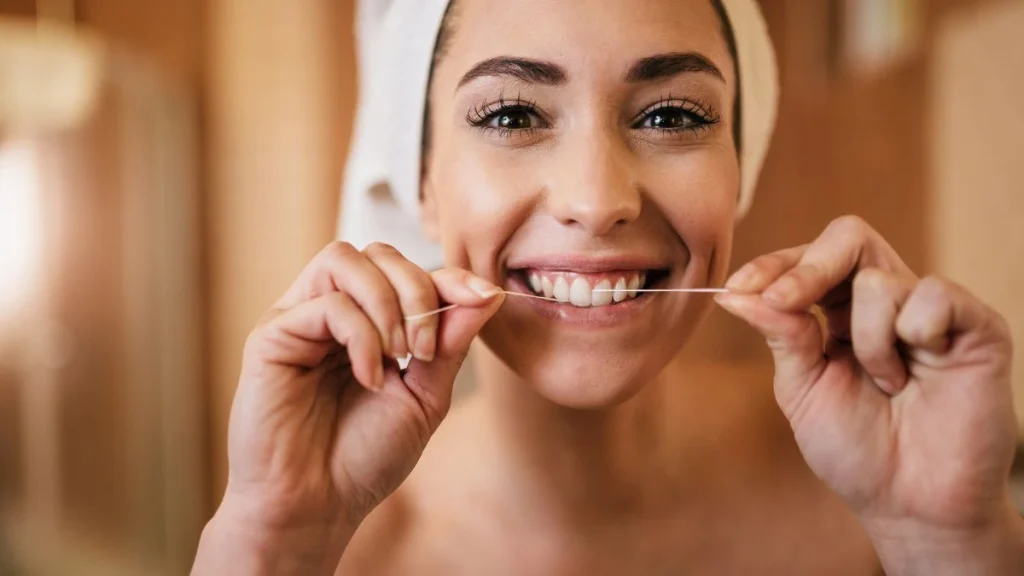
- Floss between all teeth carefully: Use a fresh section of floss as you move from one tooth to the next. Slide it gently between your teeth, curve it around each tooth, and move it up and down. Avoid snapping it into your gums. This helps remove plaque from areas your toothbrush cannot reach.
- Brush for two minutes using fluoride toothpaste: Hold your toothbrush at a slight angle toward your gums and use small, gentle strokes. Go over the front, back, and chewing surfaces of each tooth. Taking a full two minutes helps you cover everything properly.
- Spit out excess toothpaste without rinsing immediately: Once you’re done brushing, spit out the extra toothpaste, but don’t rinse right away. This gives the fluoride more time to sit on your teeth and do its job.
When Is the Best Time to Floss?
Now that you know whether to floss or brush first, the next question is just as important: when should you floss? You only need to floss once a day, and the best time is whenever you can do it consistently.
For most people, flossing at night works best. It helps remove food and plaque built up during the day before you go to sleep, when your mouth is more prone to dryness. If nights don’t work, morning flossing is also fine. The goal is to make it a regular habit, not to follow a strict schedule.
Common Types of Dental Floss and How to Pick the Right One
Even with the right technique and order, your routine can feel difficult if you are not using a type of floss that suits you. Our expert dentists, Dr. Rich Capp and Dr. Lee DeKrey, often guide patients towards options that feel easy and comfortable to use every day.
Here are some common types to consider:
- Waxed floss: Slightly thicker and easier to slide between tight teeth. It’s less likely to snap while using it.
- Unwaxed floss: Thinner and fits into very tight spaces, but it can fray more easily.
- Dental tape: It is wider and flatter compared to standard dental floss. Works well if you have more space between teeth.
- Floss picks: Pre-threaded floss with a handle. Easy to use, especially when you are short on time.
- Water flosser: Uses a stream of water to remove food particles and plaque between teeth and along the gumline. Often helpful for braces or sensitive gums.
In the end, the best choice is the one that fits easily into your routine. Using it regularly matters more than the type itself.
Common Flossing Mistakes to Avoid
Even if flossing is part of the routine, the way it’s done matters just as much. Small habits can reduce how well it works without you realizing it.
Here are some key things to keep an eye on:
- Snapping the floss into your gums: Instead of forcing it down, guide the floss gently between your teeth to avoid irritation.
- Skipping the back teeth: Plaque often builds up in these areas, so they need just as much attention as the front teeth.
- Using the same section of floss throughout: A fresh section helps avoid spreading plaque from one area to another.
- Rushing through the process: Take your time to clean both sides of each tooth properly.
- Flossing inconsistently: Doing it occasionally will not give the same benefits as making it a daily habit.
Who Should Pay Extra Attention to Flossing
Flossing matters for everyone, but for some people, it becomes even more important to stay consistent and careful. This includes:
- People dealing with gum sensitivity or early signs of gum disease.
- Those with braces, bridges, or dental implants.
- Individuals with tightly spaced or crowded teeth.
- Anyone who tends to get plaque or tartar buildup quickly.
Final Words
Deciding whether to use dental floss before or after brushing might not seem like a big deal, but it can make your routine work a little better. Flossing first helps clear out the tight spaces between your teeth, so when you brush, you’re cleaning more effectively. Over time, small habits like this can really help keep your teeth and gums in good shape.
If you are unsure about your routine or want more personalized advice, it can help to speak with a dental professional. At Anoka Dental, care focuses on simple, practical guidance to help you maintain a routine that works for you.
For those looking for trusted dental cleanings in Anoka, MN, our team is here to help. You can call (763) 421-4002 to book an appointment or visit at 12 Bridge Square, #106, Anoka, MN 55303.
FAQs
Yes, this can happen, especially if you are just starting or have not been flossing regularly. It usually settles as your gums adjust. If bleeding continues, it is worth getting it checked.
No, you do not need a completely new piece each time. Just move to a clean section of floss as you go from one tooth to the next.
A water flosser can help with cleaning, but regular floss is often more effective for tight spaces between teeth.
Flossing should begin once their teeth start to touch. At this stage, brushing alone is not enough to clean between teeth.
Plaque can build up between teeth over time. This may lead to cavities, bad breath, and gum problems if it is not cleaned regularly.