

Straighten crowded, gapped, or shifted teeth with clear Invisalign aligners custom-fit to your smile, minus metal brackets or wires.
Invisalign is a sequence of custom, BPA-free plastic aligners that move teeth gradually, without metal brackets or wires.
At Anoka Dental’s Invisalign clinic, we begin every case with a digital scan that replaces old-fashioned putty impressions and builds a precise 3D model of your bite. We map out every planned tooth movement before your first tray is made, so you see a clear preview of your final projected outcome. Most patients switch aligners after one to two weeks, wearing each tray 20 to 22 hours a day, and visit our clinic every six to eight weeks so we can track progress.
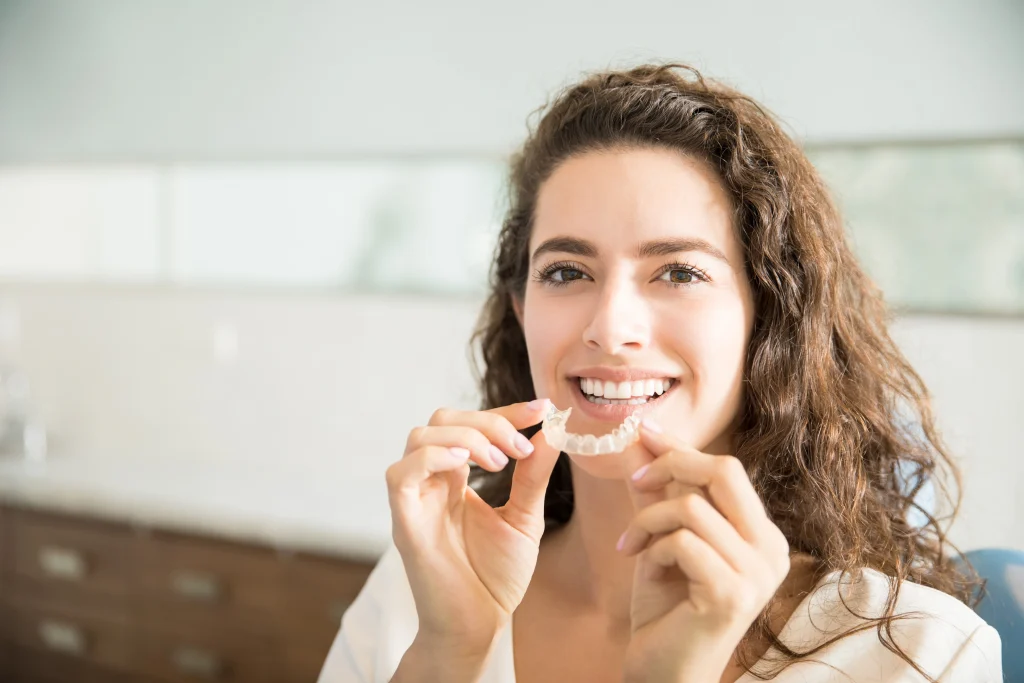
Invisalign treatment corrects most mild to moderate spacing and bite issues we see in Anoka Dental. Our Invisalign specialist reviews your scan to confirm your case fits clear aligners.
Here’s what Invisalign can correct:
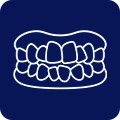
Crowding happens when your jaw lacks room for every tooth, so teeth twist and stack. Aligners open space in small stages. That means you get straightened and easy-to-clean teeth.
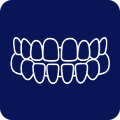
Open gaps between teeth let food collect and can expose gum tissue to bacteria. Custom trays close these spaces step by step, tightening the arch into a fuller smile.
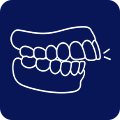
A deep overbite lets upper teeth cover the lower teeth too much, wearing enamel and stressing the jaw joint. Aligners reposition teeth to correct the bite depth.
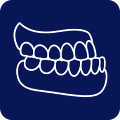
An underbite pushes the lower jaw ahead of the upper teeth, which can strain speech and chewing patterns. Aligners guide teeth back so the bite lines up more naturally.
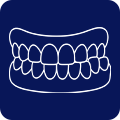
With a crossbite, some upper teeth sit behind the lower teeth when you bite down. This can cause uneven wear. Aligners gradually guide the teeth into better positions.
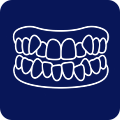
Teeth can shift out of position over time, including after previous braces. Invisalign uses clear trays and small attachments to guide them into better alignment.
The clear trays are custom-fitted and hard to notice in person or photos. You can straighten your teeth discreetly.
Slide your aligners out for meals, coffee, brushing, and flossing, then click them back in with no wires involved.
Smooth, custom-molded plastic skips the sharp edges and mouth sores that metal brackets and wires often cause.
There are no snapped brackets or loose wires to fix between visits, so appointments stay quick and infrequent.
Invisalign may be suitable if you have most or all of your adult teeth and want to address noticeable issues in position or alignment. Here’s what an Invisalign specialist may assess with you:
Fix issues like crowding and gaps discreetly while keeping up with work and daily life.
A strong option for teens whose adult teeth are in and who can wear aligners as directed.
Meet our Anoka Dental Invisalign specialist to discuss your dental goals and review your treatment options.
We take a detailed 3D scan of your teeth and build your personalized aligner plan.
Switch to a new aligner every one to two weeks and stop by for quick progress checkups.
Wear your custom retainer as directed to lock in your results after active treatment ends.
Invisalign and metal braces both straighten teeth reliably, but they suit different lifestyles and budgets. Weigh your bite complexity, daily habits, appointment schedule, and how visible you want your Invisalign treatment to look to coworkers and friends before deciding.
Appearance
Nearly transparent, blends with teeth
Metal brackets and wires stay visible
Removed before meals, no diet restrictions
Sticky, hard, and chewy foods off-limits
Normal brushing and flossing routine
Requires floss threaders and extra tools
Smooth edges, mild pressure per new tray
Wire ends and brackets can irritate cheeks
Brief check-ins every six to eight weeks
Frequent tightening appointments
Best for
Mild to moderate, discretion-minded patients
Complex movements, fixed-appliance cases
Remember: Results and treatment times vary by patient. Our Invisalign specialists can provide a more realistic estimate of results.
Still have questions about our Invisalign clinic? Call (763) 421-4002 and our team will help.
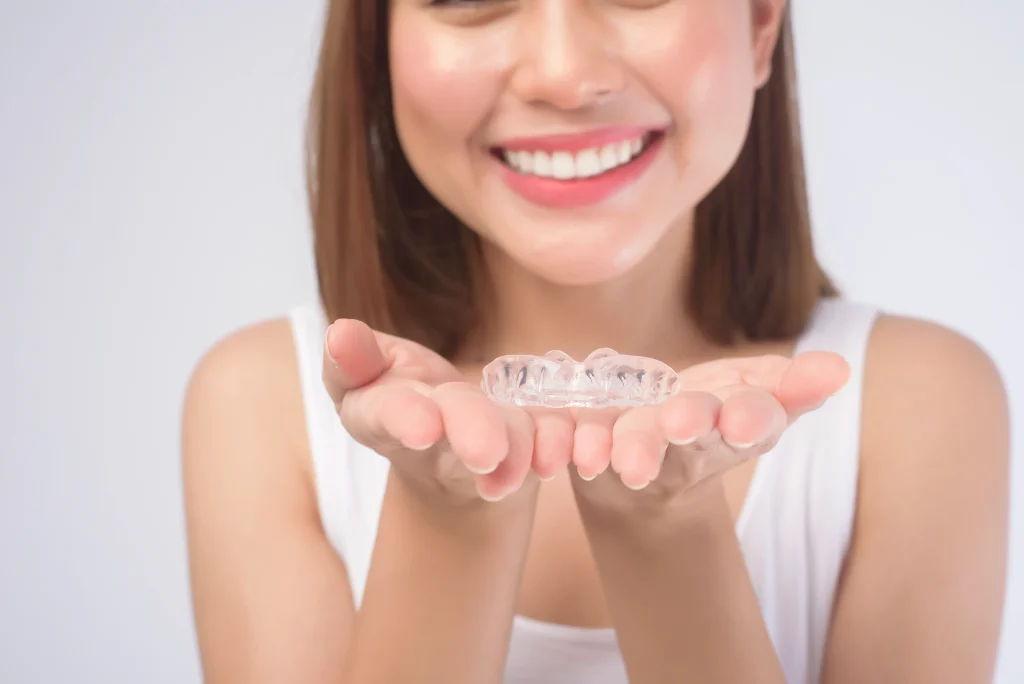
The Invisalign specialist at Anoka Dental takes a digital scan of your teeth and bite, then plans a full sequence of custom aligner trays. You switch trays on schedule, and each set nudges your teeth a fraction closer to their final position.
The treatment length with Invisalign depends on how much intervention is needed. Mild cases may need 6 months of Invisalign treatment, while more complex bite issues may take 18 months or longer to be resolved. Your Invisalign specialist will give you a realistic timeline after your scan.
Pricing for Invisalign varies with case complexity and treatment length. The Anoka Dental clinic reviews exact costs and payment plans at your consultation, along with our affordable dental savings plan for patients without insurance.
Many plans cover Invisalign under orthodontic benefits, often up to a lifetime maximum shared with traditional braces. Our team verifies your specific coverage and out-of-pocket cost before your Invisalign treatment begins.
It is advised to wear your Invisalign aligners for 20 to 22 hours every day. Remove them only for meals, drinks other than water, and oral hygiene, then put them back in right away to stay on schedule.
Invisalign isn’t necessarily painful. Patients can expect mild pressure for a day or two after each new tray as teeth adjust. Most patients describe this as milder and shorter-lived than the soreness that comes with tightened metal braces.
Yes, once a teen’s adult teeth have fully erupted, they can get Invisalign. Our Invisalign specialist also verified that a teen can stay disciplined with wear time, since results greatly depend on consistency.
Both Invisalign and traditional braces have their merits. Invisalign suits mild to moderate alignment issues with the benefit of a removable and low-visibility design. Braces can handle more complex movements that aligners cannot suitably address.
Yes, you will need to use retainers after Invisalign. Teeth drift naturally after any orthodontic treatment, so a custom retainer locks in your results. At Anoka Dental, we fit yours at your final visit and set a wear schedule to protect your new smile.